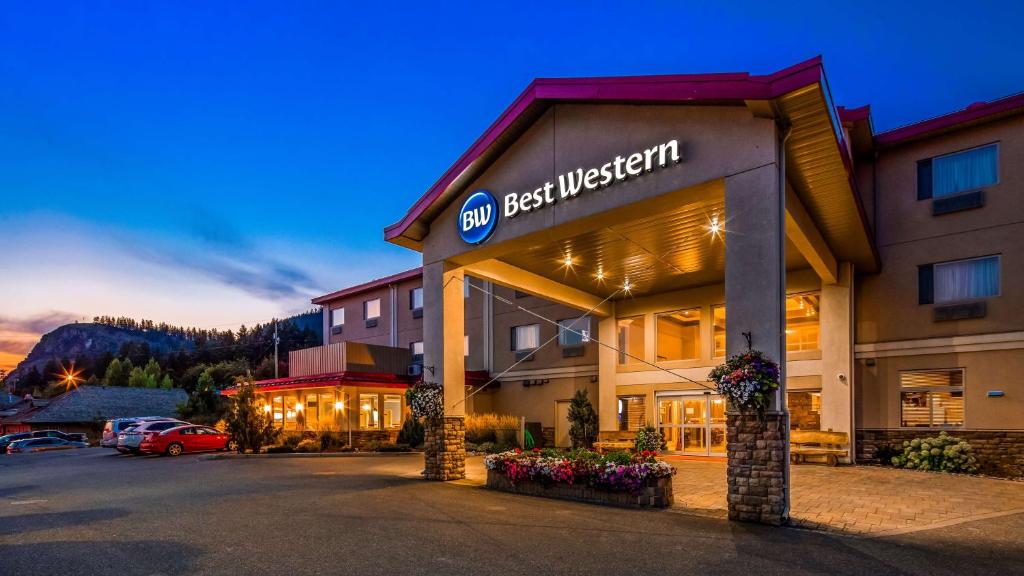
Beyond the Lobby: How Best Western Quietly Fits Into Real-Life Travel Decisions
Travel today is no longer just about picking a destination. It is about managing expectations, budgets, timing, and comfort all at once. And in that mix, hotels are not just places to sleep anymore. They are part of the entire travel strategy. That is where Best Western becomes interesting from a different angle—not as a luxury escape or a budget fallback, but as a practical travel tool that adapts to how people actually move through the world.
Instead of being defined by one type of traveler, Best Western operates in a space where usefulness matters more than image. It is often chosen not because it is the most talked-about option, but because it solves real travel problems: location, availability, consistency, and predictable comfort. In a travel landscape filled with uncertainty, that kind of stability is starting to feel like its own form of value.
When Travel Becomes a Logistics Game, Not Just a Vacation
A lot of modern trips are not simple vacations anymore. They are layered with business meetings, layovers, family visits, road trips, and last-minute changes. In those situations, hotels stop being “destinations” and start becoming operational decisions.
Best Western fits into this reality by offering stays that prioritize function over spectacle. The focus is not on turning the hotel into the main attraction, but on making sure everything around the stay works smoothly.
That includes things like:
- Easy check-in without unnecessary delays
- Locations that reduce travel time between stops
- Basic but dependable room setups
- Accessibility for different types of travelers
- Straightforward booking without overcomplication
These may sound simple, but in real travel scenarios, simplicity is what prevents stress from building up. When schedules are tight, small conveniences start to matter more than aesthetic extras.
Why Real Travelers Care More About “No Surprises” Than Luxury Branding
One of the biggest shifts in travel behavior is that people are becoming less impressed by branding and more focused on reliability. A stylish hotel that fails on comfort or service does not leave a lasting positive impression. Meanwhile, a simple hotel that consistently delivers what it promises often earns repeat visits.
That is part of the space where Best Western continues to stay relevant. It is not trying to position itself as an ultra-luxury experience. Instead, it focuses on reducing uncertainty.
Travelers often value:
- Clean rooms that match expectations from booking photos
- Functional amenities that actually work
- Staff responsiveness when issues arise
- Predictable comfort across different locations
- Transparent pricing without hidden surprises
When travel already involves enough unpredictability—flight delays, weather changes, traffic—having at least one stable part of the journey makes a noticeable difference.

The “Mid-Trip Anchor” Effect That Most People Don’t Notice
There is an underrated role that hotels play in travel: they act as anchors between moving parts of a trip. A poorly chosen stay can add friction to everything else, while a well-placed hotel makes the rest of the journey smoother.
Best Western often functions as that kind of anchor for many travelers. It is not necessarily the highlight of the trip, but it supports the highlight by keeping everything else stable.
This becomes especially important in situations like:
- Multi-city trips where rest points matter
- Road travel with long driving hours
- Business trips with tight schedules
- Family travel requiring predictable routines
In these cases, the hotel is less about indulgence and more about recovery and reset. A clean room, a good bed, and a reliable location can directly influence how the next day of travel feels.
Consistency Across Locations: Why It Matters More Than People Realize
One of the biggest frustrations in travel is inconsistency. A great experience in one place does not guarantee the same experience somewhere else, even under the same brand category. That is why consistency becomes a major decision factor for frequent travelers.
With Best Western, the expectation is not perfection everywhere, but a baseline standard that travelers can rely on. That predictability is especially useful for people who travel often and do not want to re-learn what “good” looks like every time they book a room.
This consistency supports:
- Faster decision-making when booking
- Reduced anxiety about unknown hotel quality
- Easier planning for repeat travel routes
- More confidence in unfamiliar destinations
Even when properties differ in style or size, the overall experience tends to follow a familiar structure. For frequent travelers, that familiarity becomes a form of efficiency.
Location Strategy: The Hidden Advantage in Real Travel Planning
Hotels are not just chosen for comfort anymore. Location has become one of the most important decision drivers, especially when travel time and transportation costs are factored in.
Best Western properties are often positioned in practical locations rather than purely scenic or luxury-heavy zones. That means closer access to highways, business districts, airports, and key city routes.
This creates real-world advantages like:
- Shorter transit times between destinations
- Easier access to public transport or main roads
- Reduced dependence on expensive commuting options
- Better alignment with tight travel schedules
For many travelers, saving an hour of travel time is more valuable than upgrading a room category. That is where location-driven hotel choices quietly outperform more visually impressive options.

What Smart Travelers Are Really Optimizing For
Travel planning has become more strategic than ever. Instead of asking “Where is the nicest place to stay?”, many people are now asking “Where will this stay make my trip easier?”
That shift is where Best Western naturally fits in as a practical choice. It is often selected not for status, but for efficiency.
Travelers today are optimizing for:
- Time savings over aesthetic upgrades
- Reliable sleep quality over luxury extras
- Predictable service over experimental experiences
- Budget control over unnecessary add-ons
- Convenience over visual appeal
This does not mean luxury has lost its place. It just means the definition of value has expanded. For many people, a “good hotel” is now one that reduces friction in their overall journey.
The Value of Staying Out of the Way (In a Good Way)
Not every hotel needs to be the centerpiece of a trip. Sometimes, the best hospitality experience is the one that quietly supports everything else without drawing attention to itself.
That is the space where Best Western continues to remain relevant. It is not about overwhelming travelers with design or novelty. It is about giving them something more practical: a stay that works the way it should, in the places they actually need it.
In a travel world that often feels increasingly complicated, that kind of simplicity is not just useful—it is strategic. And for many travelers, that is exactly what makes the difference between a stressful trip and a smooth one.